Water damage is not always easy to notice, especially when the problem starts underneath your roofing materials. Your roof may look perfectly fine from the outside, but moisture could already be affecting your attic, ceilings, walls, or wooden roof structure.
Many homeowners do not realize they have a roofing problem until they notice water stains, peeling paint, or a leak during heavy rain. By that time, the damage may have already spread to other parts of the home.
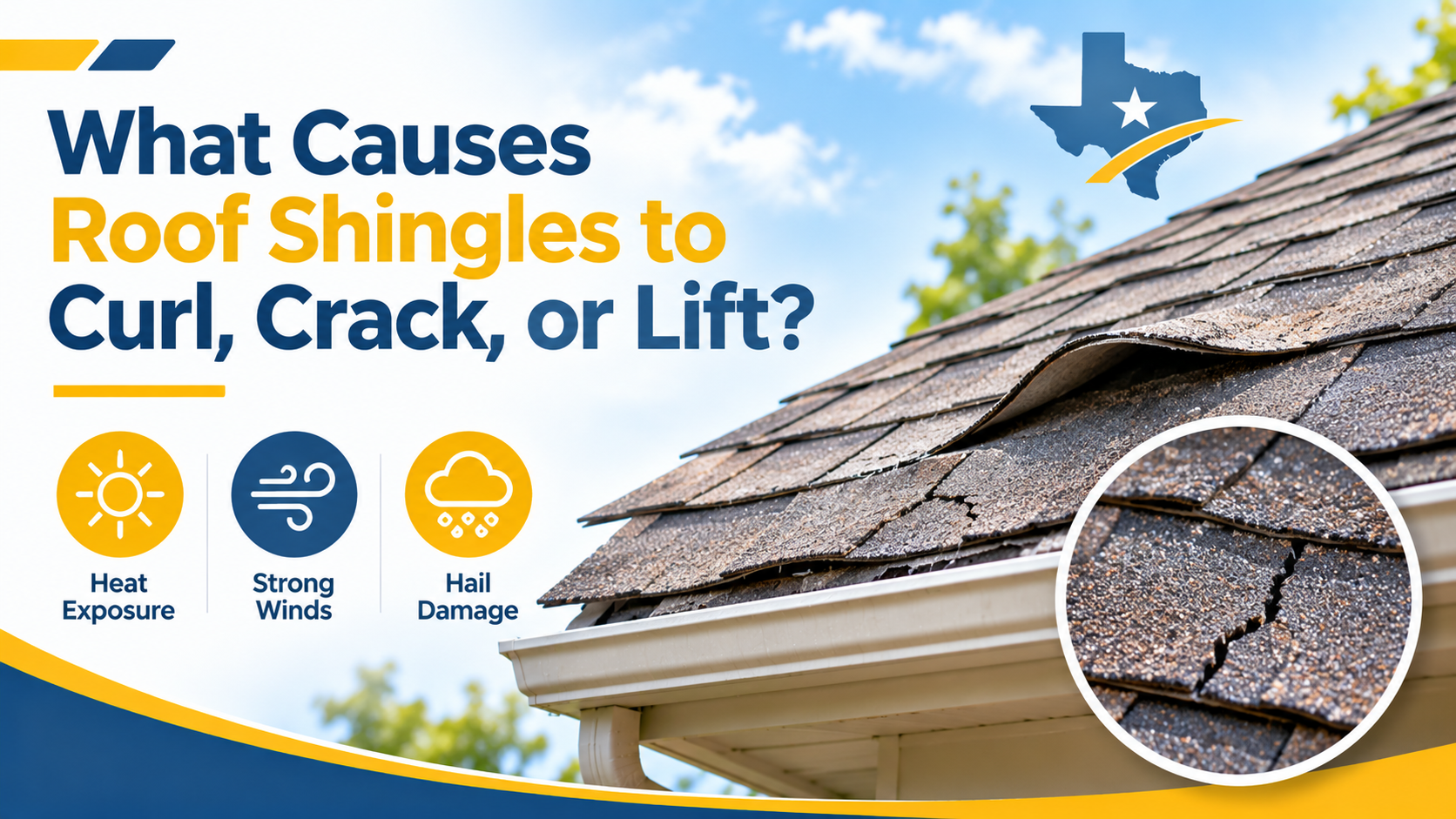
Texas weather can make these problems even more common. Heavy rainfall, hailstorms, strong winds, and extreme heat can gradually weaken roofing materials and create openings where water can enter.
The good news is that recognizing the early warning signs can help you address the problem before it becomes more expensive to repair.
Let’s look at nine common signs that your roof may have hidden water damage and why you should not ignore them.
Why Is Hidden Roof Water Damage a Problem?
Water can enter through small openings in shingles, damaged flashing, roof valleys, or other vulnerable areas. Once it gets underneath the roofing materials, it may travel along the roof decking and wooden structures before becoming visible inside your home.
This means the location where you notice water damage may not be the actual source of the problem.
If moisture remains trapped for a long time, it can damage insulation, weaken wooden materials, and create conditions for mold and mildew growth.
That is why identifying the warning signs early is important for protecting your home.
Warning Signs Your Roof May Have Hidden Water Damage
Water Stains on Ceilings and Walls
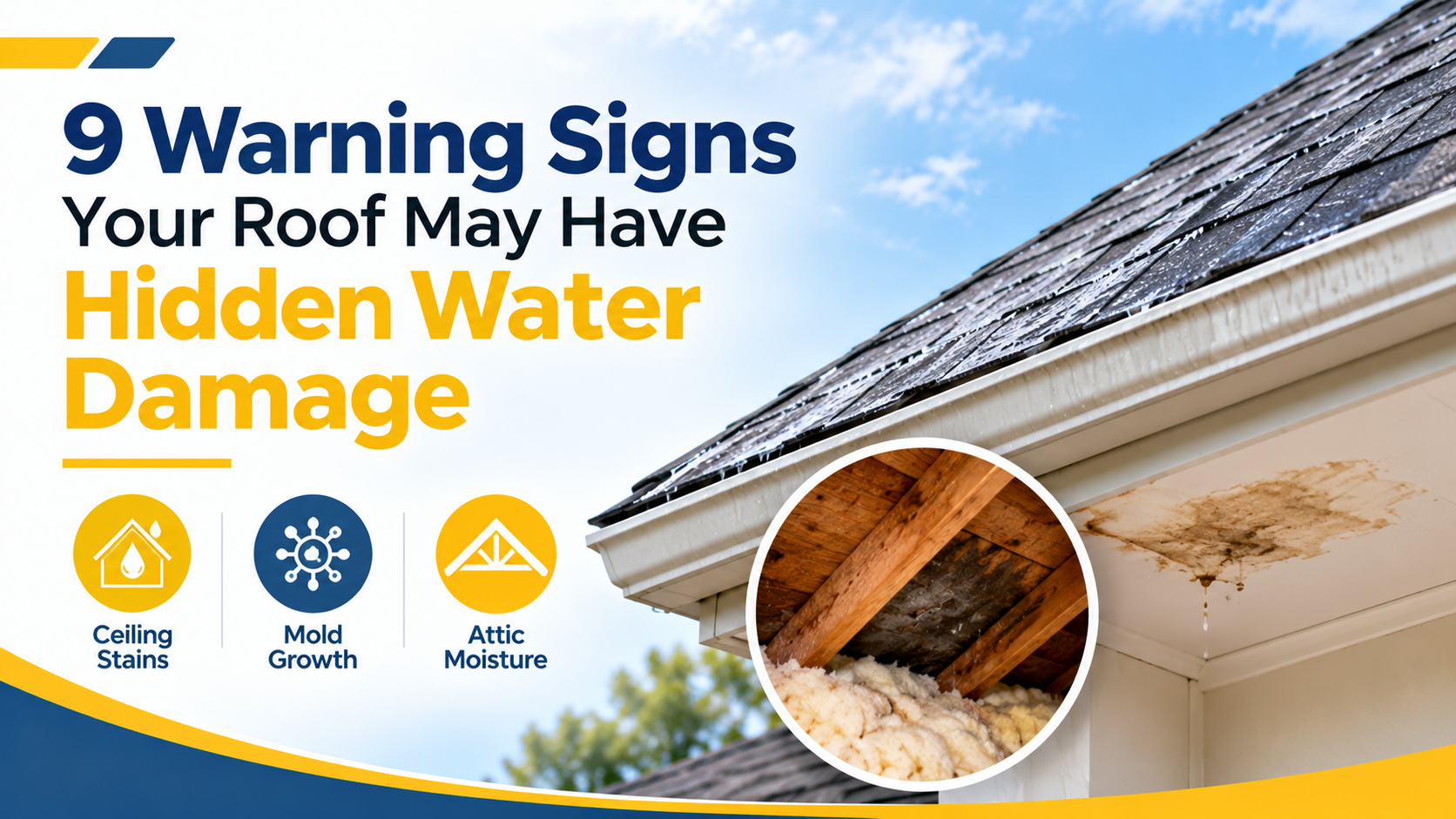
Brown or yellow stains on your ceilings and walls are among the most common signs of water damage. These marks often appear when rainwater enters through damaged roofing materials and slowly reaches the interior of your home.
You may notice small spots at first, but they can become larger or darker over time if the leak continues.
Sometimes, water stains appear far away from the actual roof damage because moisture travels along wooden structures before reaching the ceiling.
If you notice unexplained stains after heavy rainfall, it is a good idea to have your roof inspected.
Peeling Paint or Bubbling Drywall
When moisture gets behind painted surfaces, it can cause paint to bubble, peel, or crack. You may also notice drywall becoming soft or swollen.
These problems are often mistaken for ordinary interior maintenance issues, but they can indicate a hidden moisture problem.
If the damage appears near the ceiling or upper walls, water entering through the roof could be the reason.
Repainting the affected area without fixing the source of moisture will not solve the problem. The underlying leak needs to be identified first.
Musty Smell in Your Attic or Home
A musty or damp smell inside your home can be another warning sign of hidden water damage.
When water enters your attic and remains trapped in insulation, wood, or other materials, it can create an environment where mold and mildew may develop.
You may notice the smell more strongly in certain rooms, closets, or areas directly below the attic.
Even if you cannot see visible water stains, an unusual musty odor should not be ignored. It may indicate moisture that has been present for some time.
Mold or Mildew Growth
Mold and mildew can develop in areas where moisture remains for extended periods. If your roof has a leak, water may reach the attic insulation, roof decking, or ceiling materials and create suitable conditions for mold growth.
You might notice dark spots on ceilings, walls, or wooden surfaces. Sometimes, mold develops inside the attic before becoming visible in living areas.
Not all mold is caused by roof leaks, but unexplained growth near ceilings or attic spaces should be investigated.
The important thing is to identify and correct the moisture source rather than simply covering the affected area.
Damp or Wet Attic Insulation
Your attic insulation helps maintain comfortable indoor temperatures and improves your home’s energy efficiency.
However, when water enters through the roof, insulation can become damp or wet. This may reduce its effectiveness and create conditions for mold growth.
You may notice compressed insulation, damp patches, unusual odors, or visible moisture around the attic.
If you suspect wet insulation, avoid disturbing heavily affected materials and consider having a professional assess the damage.
A roof inspection can help determine whether water is entering through damaged shingles, flashing, or another part of the roofing system.
Sagging Ceiling or Soft Spots
A sagging ceiling can indicate that water has collected inside the ceiling materials over time. Continued moisture exposure can weaken drywall and other structural components.
You may notice a section of the ceiling looking uneven, swollen, or lower than the surrounding area.
This is a serious warning sign that should not be ignored. A water-damaged ceiling can become unstable and may eventually collapse.
Keep people away from sagging or bulging areas and arrange a professional assessment. Do not attempt to puncture or repair the ceiling yourself.
Damaged or Discolored Roof Decking
Roof decking is the wooden surface underneath your roofing materials. It supports the roof and provides a base for shingles and other roofing components.
When water repeatedly enters through damaged shingles, flashing, or roof connections, it can affect the decking.
Signs of possible damage include dark stains, soft or weakened wood, discoloration, and visible deterioration in accessible attic areas.
Since roof decking is not normally visible from outside your home, the problem may remain hidden until a professional inspection is performed.
If the decking has become damaged, repairs may be necessary to restore the strength and reliability of your roofing system.
Higher Energy Bills Than Usual
An unexpected increase in your energy bills may sometimes be connected to hidden roof moisture.
When attic insulation becomes wet or damaged, it may not perform as effectively as it should. This can make it harder for your heating and cooling system to maintain comfortable indoor temperatures.
You may notice your air conditioner running longer during hot Texas summers or your home feeling less comfortable than usual.
Higher energy bills can have many causes, so they do not automatically mean you have roof damage. However, when combined with damp insulation or other warning signs, they may indicate a problem worth investigating.
Damaged or Rusted Roof Components
Some roofing components can show visible signs of water exposure over time.
For example, metal flashing, fasteners, and other exposed roofing materials may develop corrosion or deterioration. You may also notice damaged sealant around vents, chimneys, or skylights.
These problems can create openings that allow rainwater to enter your roofing system.
If you notice rust, loose flashing, cracked seals, or damaged roofing materials, having them checked can help prevent further water intrusion.
What Causes Hidden Water Damage in Roofs?
Hidden water damage can develop for several reasons. One of the most common is aging roofing materials that gradually lose their ability to keep water out.
Strong winds and hailstorms can also damage shingles and flashing, creating small openings that may not be immediately noticeable. Heavy rainfall can then force water through these weak areas.
Poor installation, clogged gutters, damaged roof valleys, and inadequate attic ventilation can also contribute to moisture problems.
In some cases, previous roof repairs may have addressed the visible leak without correcting the actual source of water entry.
Understanding the cause is important because repairing the visible damage alone may not prevent the problem from returning.
What Should You Do If You Notice Signs of Roof Water Damage?
If you notice signs of possible water damage, do not wait until water starts dripping from your ceiling.
Start by documenting the affected areas with photographs. Check whether the stains or damp spots become worse after rainfall, and pay attention to any unusual odors or changes inside your attic.
Avoid climbing onto the roof yourself, especially if the surface is wet or damaged. If you notice sagging ceilings, keep people away from the affected area.
The next step is to arrange a professional roof inspection. A qualified roofing contractor can examine the roofing materials, flashing, roof valleys, and other vulnerable areas to identify where water may be entering.
Once the source is found, the contractor can recommend the appropriate repair based on the extent of the damage.
How Can Texas Homeowners Prevent Roof Water Damage?
Regular roof maintenance can help reduce the risk of hidden water damage. Texas homeowners experience heavy rainfall, strong winds, hail, and extreme temperatures, all of which can affect roofing materials over time.
Having your roof inspected periodically can help identify damaged shingles, loose flashing, and other problems before water enters your home.
Keeping gutters clean is equally important because proper drainage helps prevent water from collecting around vulnerable roof areas.
It is also a good idea to check your roof after severe storms, even if you do not notice any leaks inside the house. Some damage may not become visible until the next heavy rainfall.
Taking care of small roofing problems early can help extend your roof’s lifespan and reduce the chances of expensive repairs.
Frequently Asked Questions
Can a Roof Have Water Damage Without Leaking Inside the House?
Yes. Water can enter underneath roofing materials and remain trapped in the attic, insulation, or roof decking without immediately reaching your ceiling. This is why some roofing problems remain hidden for months.
How Do I Know If My Roof Has Water Damage From the Attic?
Look for damp insulation, dark stains on wooden surfaces, musty odors, visible moisture, or signs of mold. If you notice any of these problems, consider arranging a professional roof inspection.
Can Hidden Roof Leaks Cause Mold?
Yes. When moisture remains in attic insulation, drywall, or wooden materials, it can create conditions that encourage mold growth. Fixing the source of the leak and properly addressing affected materials is important.
Does a Roof Need Replacement Because of Water Damage?
Not always. If the damage is limited to a small area, repairing damaged shingles, flashing, or underlayment may be enough. However, widespread damage or weakened roof decking may require more extensive repairs or replacement.
How Long Does It Take for Water Damage to Appear on a Ceiling?
It depends on how much water is entering your home and where the moisture collects. Some leaks create visible stains quickly, while others remain hidden for weeks or months before becoming noticeable.
Can Heavy Rain Cause Hidden Roof Damage?
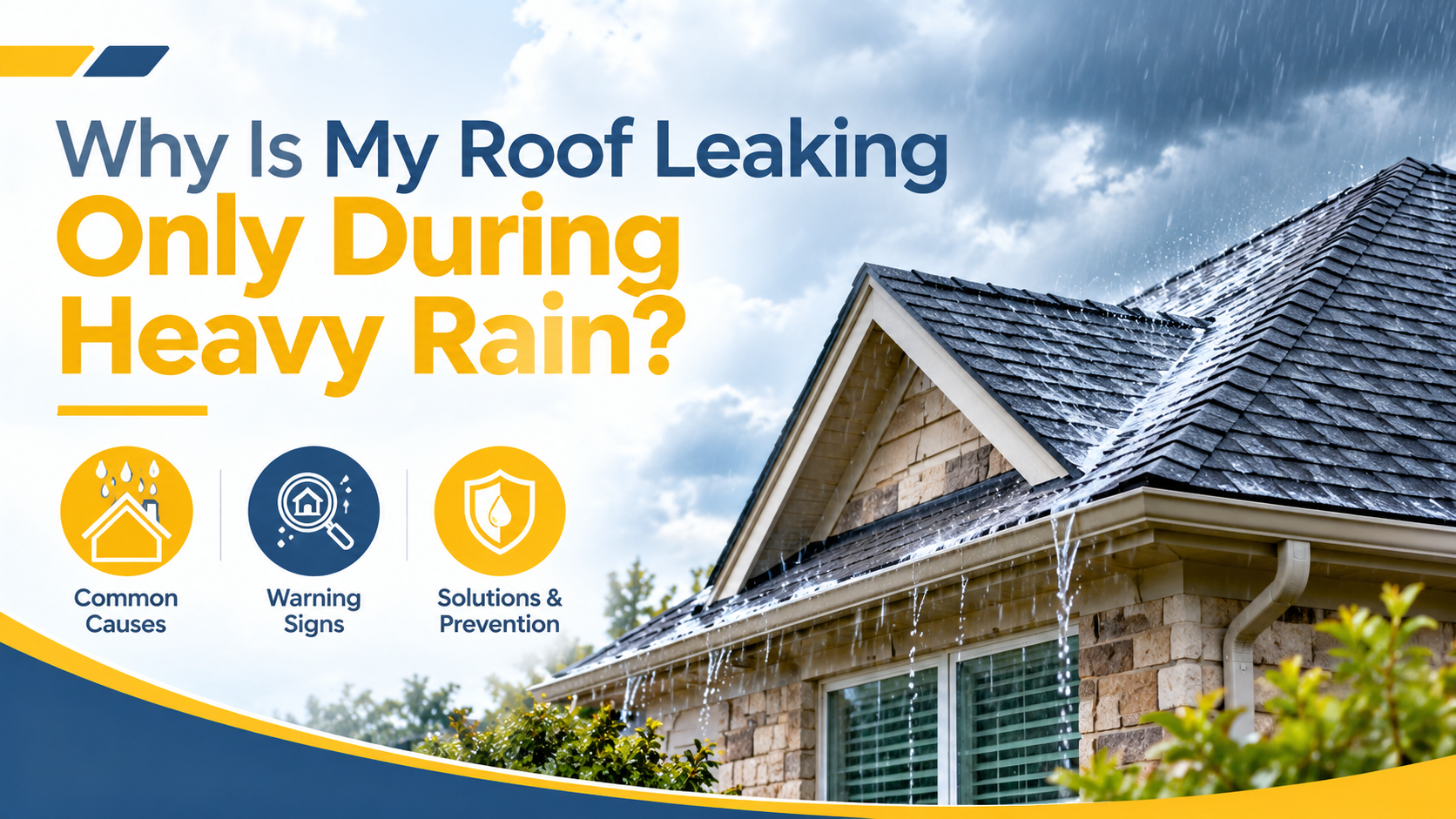
Yes. Heavy rainfall can expose weak areas in your roofing system and allow water to enter through small openings. Damaged flashing, missing shingles, and clogged drainage areas are common reasons for water intrusion during storms.
Final Thoughts
Hidden roof water damage can become a serious problem if it is not identified early. Water stains, peeling paint, musty odors, wet insulation, and sagging ceilings are all signs that your roofing system may need attention.
Even if your roof looks fine from the outside, moisture could already be affecting the materials underneath.
If you notice any of these warning signs in your home, consider scheduling a professional roof inspection. Finding the source of the problem early can help prevent further damage and save you from more expensive repairs.
If you are a homeowner in Central Texas and suspect your roof has hidden water damage, contact an experienced roofing professional to have your roof inspected and find the right solution for your home.