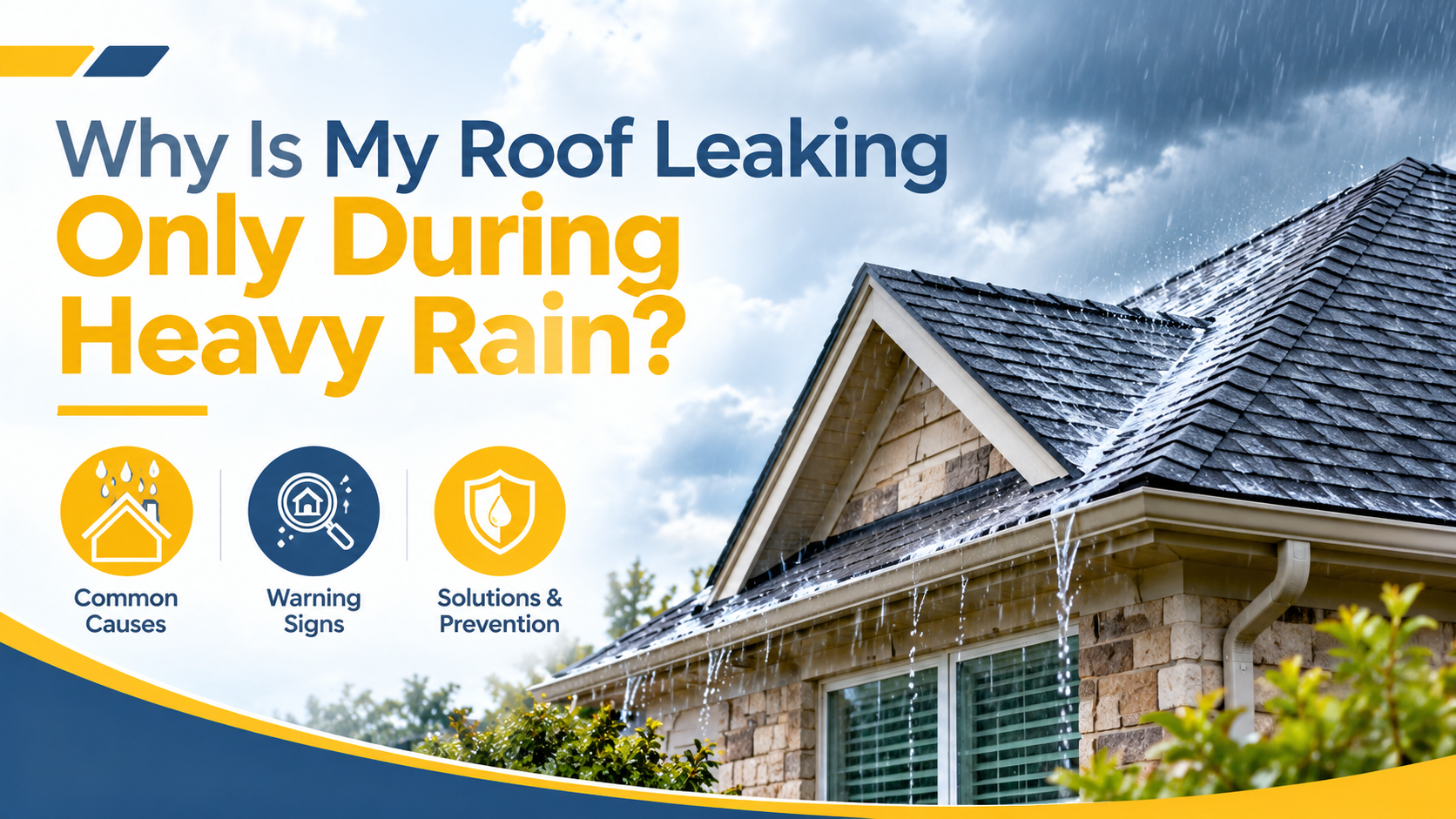
Have you noticed water leaking from your roof only when it rains heavily? Your roof may seem perfectly fine during light rain, but when a strong storm arrives, you suddenly notice water dripping from the ceiling or wet spots appearing on your walls.
This is a common problem for homeowners in Texas. Heavy rain, strong winds, and severe storms can expose small problems in your roofing system that may go unnoticed during normal weather.
The good news is that not every roof leak means you need a complete roof replacement. Sometimes, a minor roofing issue can be fixed with a simple repair. Understanding what causes these leaks can help you protect your home and avoid expensive damage.
Common Reasons Your Roof Leaks During Heavy Rain
There are several reasons why your roof may leak only during heavy rainfall. In many cases, the problem is related to damaged roofing materials, poor drainage, or small openings that allow water to enter your home.
Let’s look at some of the most common causes.
Damaged or Loose Roof Shingles
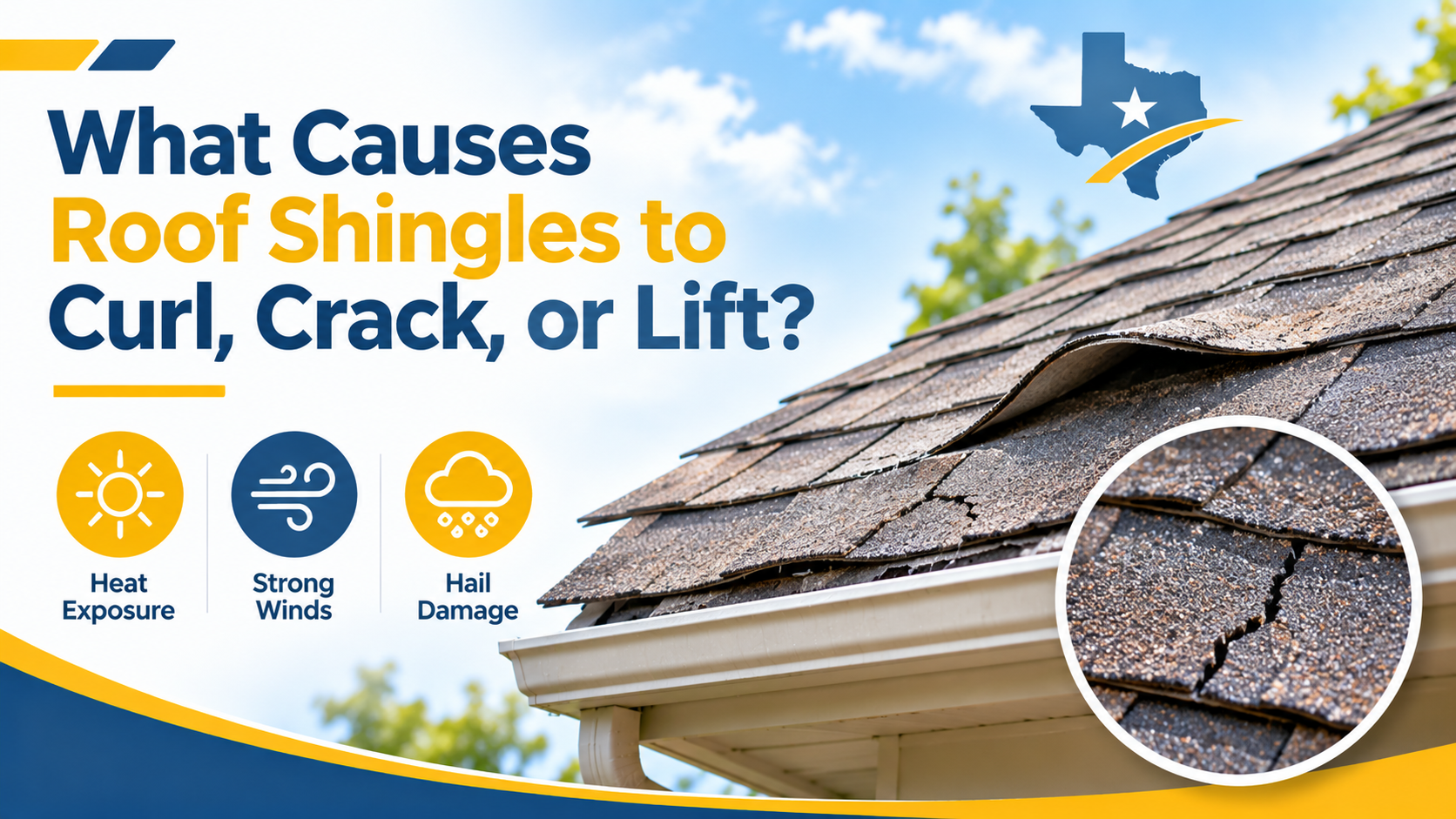
Roof shingles protect your home from rain, wind, and other weather conditions. Over time, they can become cracked, loose, or damaged because of strong winds, hail, and regular wear and tear.
During light rain, water may flow over the damaged area without entering your home. However, heavy rain combined with strong winds can push water underneath the shingles and cause leaks.
If you notice missing shingles, cracked surfaces, or pieces of roofing material around your property, it may be time to have your roof inspected.
Damaged Roof Flashing
Roof flashing is installed around chimneys, skylights, vents, and other areas where water could enter your roof. Its main purpose is to prevent water from reaching the underlying roof structure.
Over time, flashing can become loose, cracked, or damaged. During light rain, you may not notice any problems, but heavy rainfall can force water through these openings.
If you notice water stains around chimneys, skylights, or ceiling areas near roof openings, damaged flashing could be the reason.
Clogged Gutters
Gutters help move rainwater away from your roof and home. When they become filled with leaves, dirt, and other debris, water cannot drain properly.
During heavy rainfall, blocked gutters may overflow and allow water to collect around the roof edges. This can increase the risk of water entering through vulnerable areas near the roofline.
Regular gutter cleaning is important, especially in areas of Texas where trees, seasonal storms, and heavy rainfall can create drainage problems.
Problems With Roof Valleys
Roof valleys are the areas where two sections of a roof meet. These areas collect and direct large amounts of rainwater toward the gutters.
If the flashing or roofing materials in these areas become damaged, water may enter your home during heavy rainfall. Leaves and other debris can also block the normal flow of water, increasing the chances of leaks.
Because roof valleys handle a significant amount of rainwater, even small defects can become serious during strong storms.
Strong Winds During Rainstorms
Sometimes, the problem is not just heavy rain but also the strong winds that come with it. Wind can push rainwater underneath shingles, around flashing, and through small openings in your roof.
This is why some homeowners experience roof leaks only during storms with strong winds. Even if your shingles appear to be in good condition, gaps around roof edges and other connections may allow wind-driven rain to enter.
If your roof leaks during windy weather but stays dry during normal rainfall, wind-driven rain could be the reason.
Damaged Roof Underlayment
Roof underlayment is a protective layer installed beneath your shingles. It provides additional protection against moisture and helps prevent water from reaching the roof decking.
Over time, underlayment can become damaged because of aging, poor installation, or prolonged exposure to moisture. When this happens, water may pass through small openings in the roofing materials and reach the underlying structure.
This type of damage is not always visible from outside your home, so a professional roof inspection may be necessary.
Cracked Seals Around Roof Openings
Your roof has several openings for vents, pipes, and other equipment. These areas are usually sealed to prevent water from entering your home.
Over time, exposure to sunlight, heat, and changing weather conditions can cause the sealant to crack or become loose. During heavy rainfall, water may enter through these small gaps and cause leaks.
Checking these areas regularly can help identify problems before they lead to more extensive water damage.
Poor Roof Installation
Sometimes, roof leaks happen because the roofing system was not installed properly. Incorrectly installed shingles, poorly fitted flashing, and gaps around roof openings can create weak points that allow water to enter.
These problems may remain unnoticed until heavy rainfall exposes them.
If your roof continues leaking even after previous repairs, consider having another qualified roofing contractor inspect it to identify the actual source of the problem.
How Can You Find the Source of a Roof Leak?
Finding the exact location of a roof leak is not always easy. Water can enter through one area and travel along the roof structure before appearing somewhere else.
For example, rainwater may enter near a chimney and travel along the roof decking before reaching your ceiling. This means the visible water stain may not be directly below the damaged area.
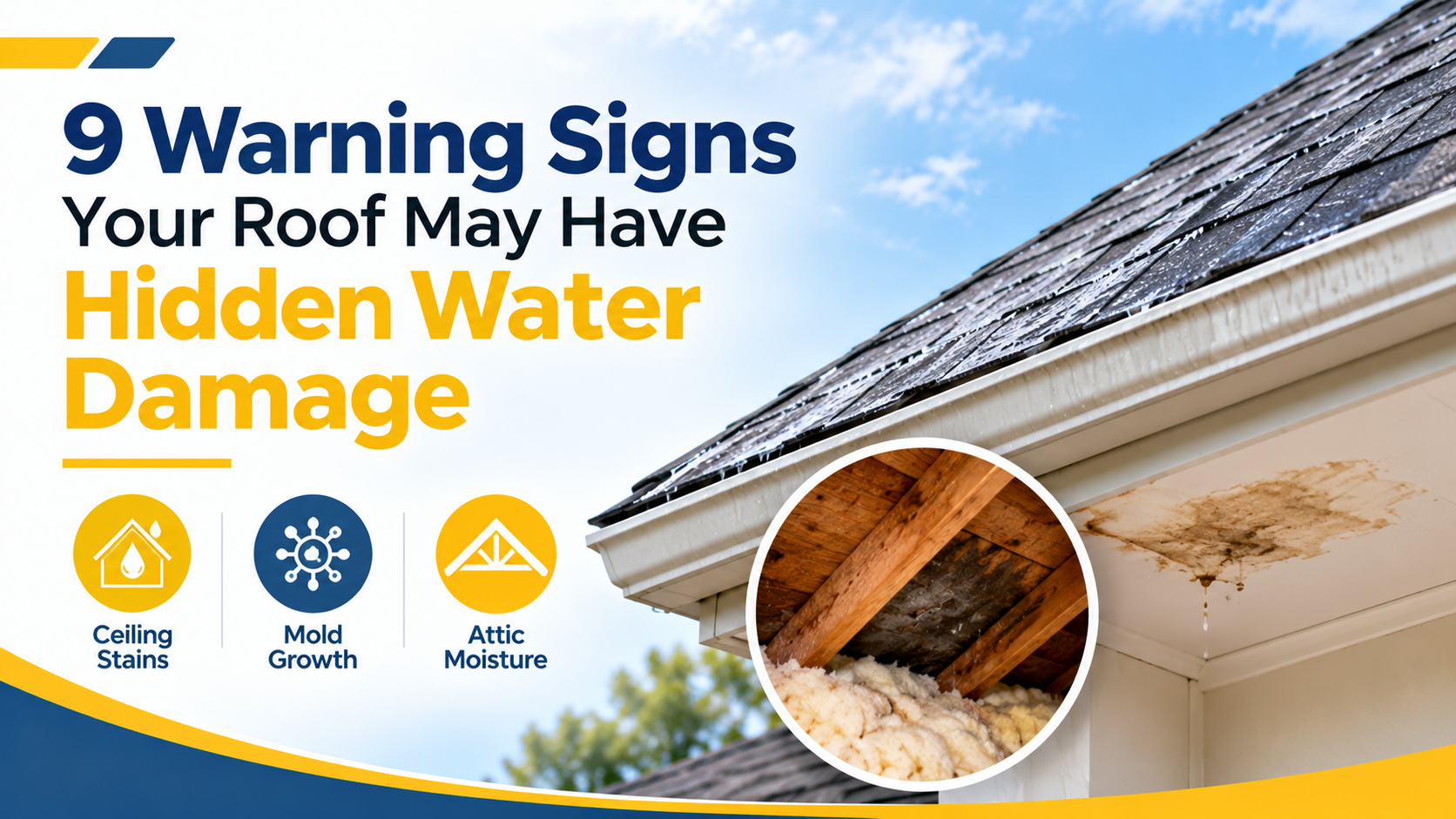
You can start by checking your ceilings for brown stains, peeling paint, or damp spots. If your attic is safely accessible, look for wet insulation, water stains, or signs of moisture around the roof decking.
Pay attention to when the leak occurs. If it happens only during heavy rainfall with strong winds, wind-driven rain may be contributing to the problem.
Taking photographs of the affected areas can also help your roofing contractor understand the situation and identify possible causes.
Avoid climbing onto your roof, especially during rain or strong winds. A professional inspection is the safest way to locate the source of the leak.
What Should You Do When Your Roof Starts Leaking?
If you notice water coming through your ceiling during heavy rain, taking quick action can help reduce additional damage.
Start by moving furniture, electronics, and other valuable belongings away from the affected area. If it is safe, place a bucket under the leak to collect dripping water and protect your flooring.
Take pictures of the damage for your records and contact a roofing professional to inspect your roof. If the ceiling starts sagging or bulging, keep everyone away from that area because wet ceiling materials can become unstable.
If water is near electrical fixtures, switches, or outlets, avoid touching the affected area and seek help from a qualified electrician.
Never attempt to repair your roof during a storm. Wet roofing surfaces can be extremely dangerous.
Can a Small Roof Leak Cause Serious Damage?
Yes, even a small roof leak can cause bigger problems if you ignore it. Water can gradually damage your ceilings, walls, insulation, and wooden roof structure.
Continued moisture can also create conditions for mold and mildew growth, which may affect your home’s indoor environment.
In some cases, water can reach electrical wiring and create additional safety concerns. What starts as a small leak can eventually turn into a much more expensive repair project.
Getting a roof leak inspected and repaired early can help protect your home and prevent unnecessary expenses.
How Can You Prevent Roof Leaks During Heavy Rain?
Regular roof maintenance is one of the best ways to reduce the chances of unexpected leaks. Texas homeowners experience different weather conditions throughout the year, including heavy rain, strong winds, hail, and extreme heat.
Having your roof inspected periodically can help identify damaged shingles, loose flashing, and other issues before they become serious. Keeping gutters clean and making sure water can drain properly also helps protect your roofing system.
You should also pay attention to your roof after severe storms. Even if there are no visible leaks inside your home, strong winds and hail may have damaged roofing materials.
Maintaining proper attic ventilation and addressing minor roofing problems promptly can also help extend the life of your roof.
Frequently Asked Questions
Why Does My Roof Leak Only During Heavy Rain?
Your roof may have small gaps, damaged shingles, loose flashing, or clogged gutters. Light rain may not expose these problems, but heavy rainfall can push more water into vulnerable areas and cause leaks.
Can Strong Winds Cause Roof Leaks?
Yes. Strong winds can push rainwater underneath shingles and through small openings around flashing and other roof connections. This is particularly common during severe Texas thunderstorms.
Can Clogged Gutters Cause Roof Leaks?
Yes. Blocked gutters prevent water from draining properly. During heavy rainfall, overflowing water may enter vulnerable areas around your roof edges and contribute to leaks.
Do I Need a New Roof If It Leaks During Heavy Rain?
Not necessarily. Some leaks can be fixed by replacing damaged shingles, repairing flashing, or addressing drainage problems. However, if your roof has widespread damage or is nearing the end of its lifespan, a complete roof replacement may be a better option. A professional inspection can help determine the right solution.
How Often Should I Have My Roof Inspected in Texas?
Regular professional roof inspections can help identify roofing problems before they become serious. You should also consider scheduling an inspection after major hailstorms, strong winds, or severe weather events.
Does Homeowners Insurance Cover Roof Leaks?
It depends on your insurance policy and the cause of the damage. Sudden storm-related damage may be covered, while leaks caused by poor maintenance or normal aging may not be. Contact your insurance provider to understand your coverage.
Final Thoughts
If your roof leaks only during heavy rain, it is important to find out what is causing the problem. Damaged shingles, loose flashing, clogged gutters, and strong winds are some of the most common reasons homeowners experience roof leaks during storms.
Ignoring a small leak can lead to bigger problems, including damaged ceilings, wet insulation, and mold growth. The best approach is to have your roof inspected by a professional who can identify the source of the leak and recommend the right repair.
If you are experiencing roof leaks during heavy rain in Central Texas, contact an experienced roofing contractor to have your roof checked. Timely repairs and regular maintenance can help protect your home and keep your roofing system in good condition.